
Key Takeaways
-
A cyber workforce readiness benchmark measures how prepared your cybersecurity workforce is to respond to real threats, not how many training hours they have logged.
-
From 2022 to 2025, industry data shows cyber incident volumes rising while most organizations' readiness scores stay flat, revealing a dangerous "readiness illusion."
-
Aligning to frameworks like the DoD Cyber Workforce Framework and NICE Workforce Framework is necessary but not sufficient; organizations also need performance-based benchmarks derived from exercises and real incidents.
-
Healthcare and financial services organizations are using readiness benchmarks to prioritize investments and prove cyber workforce effectiveness to boards and regulators.
-
This article provides a step-by-step outline for defining, measuring, and improving readiness benchmarks, including examples of work roles, metrics, and governance practices.
Introduction: From Training Hours to True Cyber Workforce Readiness
By late 2025, many CISOs in healthcare and financial services reported record training completions yet still watched their teams struggle with slow, inconsistent incident response during real breaches. The gap between effort and effectiveness has never been wider.
A cyber workforce readiness benchmark is a set of standardized metrics used to evaluate security team preparedness. Unlike counting course completions or certification standards held, cyber workforce benchmarks evaluate practical knowledge and skills in preventing, detecting, and responding to threats under realistic conditions. Assessing cyber workforce readiness requires evaluating operational readiness against real-world threats, not just checking boxes.
Industry research reveals a troubling pattern: 71% of organizations self-rate their readiness programs as mature, yet decision-making accuracy during exercises averages only 22%. This is the "readiness illusion," where leadership confidence is high but objective performance data shows stagnation.
Why Cyber Workforce Readiness Benchmarks Matter More Than Training Hours
Ransomware and data exfiltration incidents across hospitals and banks in 2024 and 2025 repeatedly showed that robust training programs alone did not prevent slow containment. Two organizations with identical training volumes can have wildly different detection and containment times because training hours do not measure the work performed under pressure.
Workforce readiness benchmarks should go beyond counting certifications and evaluate task performance under realistic conditions. Consider these contrasts:
-
Mean time to detect and mean time to respond are key performance indicators for cyber workforce effectiveness, yet most organizations track neither systematically.
-
Operational metrics connect workforce capability to measurable outcomes such as incident-handling performance, while training hours connect to nothing beyond compliance checklists.
-
Organizations should translate skills data into actionable insights for leadership to highlight skill gaps, rather than reporting course completion percentages.
Regular assessments help organizations track progress in workforce readiness over time, enabling year-over-year and cross-team comparison. Without this data, teams remain stuck in a "readiness rut." Organizations should continuously re-evaluate workforce readiness following major operational shifts such as cloud migrations, mergers, or regulatory changes. In 2026, SEC cyber disclosure expectations and healthcare regulators' focus on operational resilience are driving demand for objective, repeatable benchmarks that boards and regulators can trust.
Core Components of a Cyber Workforce Readiness Benchmark
Effective benchmarks combine role definitions, competencies, and performance metrics into a single coherent model. Every benchmark should define scope, scenarios, metrics, and target thresholds for what preparedness looks like.
Evaluating a cyber workforce relies on four foundational dimensions:
|
Dimension |
What It Measures |
|---|---|
|
Capacity |
The number of people with the right skills across operational functions |
|
Capability |
The technical and behavioral competencies of personnel |
|
Performance |
How skills translate into action during live scenarios |
|
Culture |
Security awareness habits and retention rates among security specialists |
Assessing both technical abilities and essential soft skills is crucial for a well-rounded cyber workforce. Evaluating coverage involves mapping critical security tasks to assigned personnel to prevent single points of failure. Benchmarks should map each metric to specific work roles such as SOC Analyst, Incident Responder, Cyber Defense Forensics Analyst, Security Architect, or Identity Engineer rather than generic information technology staff.
Key metrics include detection time, containment time, dwell time, false positive rate, escalation accuracy, and collaboration quality. Think of it as a matrix: work roles along one axis, readiness dimensions across the other.
Aligning Readiness Benchmarks to the NICE Framework and DoD Cyber Workforce Framework
Using existing frameworks ensures a common lexicon and portability of skills across organizations and sectors. Frameworks like NICE help organizations articulate their operational structures and workforce requirements, while benchmarks are mapped to established frameworks such as the NIST NICE Framework to maintain consistency.
The NICE Framework provides a standardized approach to cybersecurity roles through its cybersecurity workforce framework of 7 categories, 33 specialty areas, and 52 work roles, each defined by tasks, knowledge, skills, and abilities. The national initiative for cybersecurity education behind this framework is widely adopted across government, academia, and industry.
The DOD Cyber Workforce Framework supports workforce innovation by tailoring cyber work roles for defense missions across 7 workforce elements and 74 work roles. Its mission-oriented structure is increasingly influencing other sectors. Common standards for readiness benchmarks include the NIST NICE Framework and recognized industry certifications, but the benchmark itself must measure demonstrated capability, not just credentials.
Map internal job titles to NICE or DoD work roles so every benchmark metric links to specific tasks and KSAs in accordance with recognized standards. Once readiness gaps are identified, these frameworks also support career paths, development planning, and upskilling rather than treating benchmarking as a one-off audit.
Designing and Running Cyber Workforce Readiness Assessments
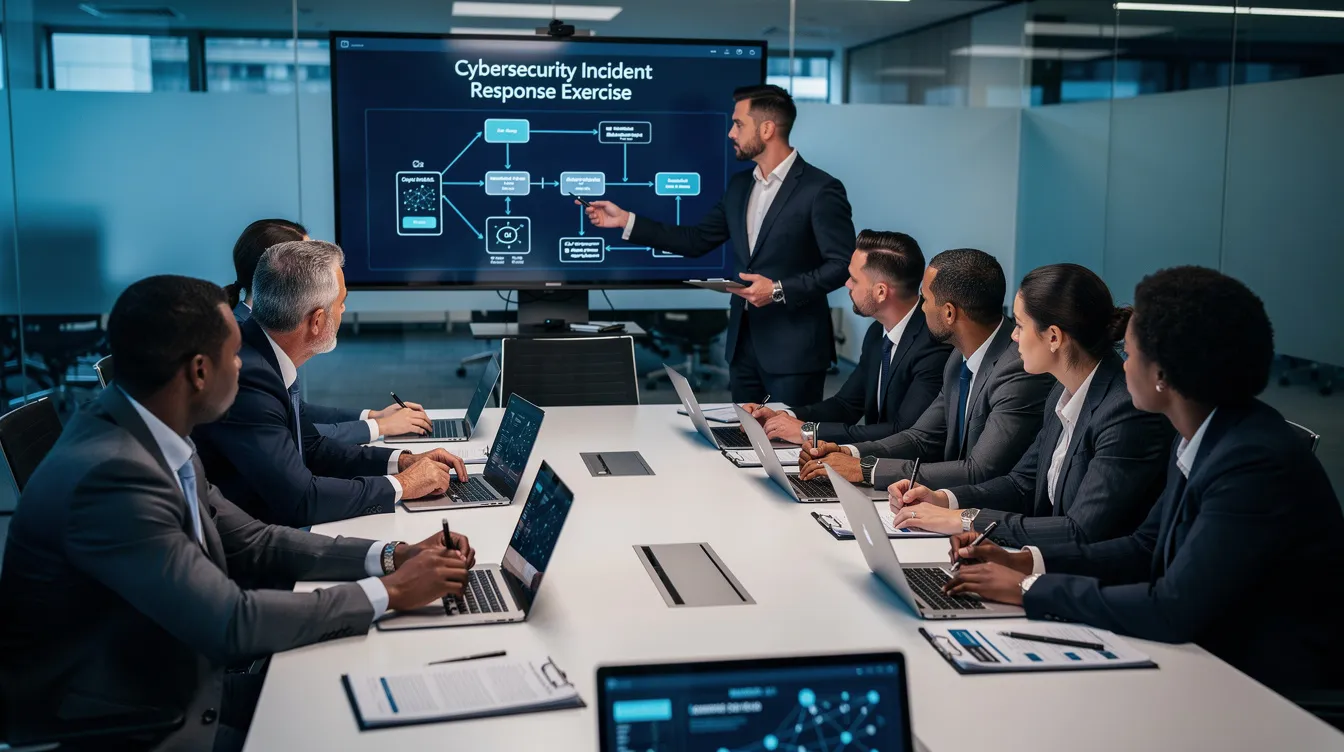
Benchmarks become meaningful only when fed by structured, repeatable assessments using realistic scenarios and data. Performance-based assessments measure practical capability under stress rather than theoretical knowledge.
Select scenarios based on recent threat intelligence and sector-specific risks: ransomware in clinical settings, payment fraud in financial services, identity attacks on cloud systems. Leverage virtual environments including cyber ranges, tabletop exercises, and live-fire simulations to stress-test teams under time pressure. The first browser-based virtual classroom was created in 2006, and in 2009, the first browser-based cyber range was developed, expanding how organizations deliver hands-on cybersecurity education. Today, open source tools create realistic cyber simulations for training, and these cyber simulations combine human actors with non-player characters to mirror real-world adversaries.
The SEI has developed immersive hands-on exercises for cyber training that go well beyond quizzes. Events like Cyber Lightning, a three-day joint training exercise in 2021, demonstrate how large-scale exercises build response capabilities across teams. Cyber simulations improve performance in high-pressure situations by developing the personnel who must respond when it matters most.
Learning and adaptability of the workforce must be assessed as technologies and threats evolve rapidly. Instrument exercises to capture timestamps, actions taken, and communication patterns. Establish a standardized scoring rubric for each work role so results can be compared across teams, regions, and years. Run quarterly team exercises and annual enterprise-wide simulations, and involve cross-functional roles like legal, compliance, and communications in managing the broader environment of an incident.
Turning Readiness Benchmark Data into Decisions and Action
Benchmark data is only valuable when it changes how the organization allocates budget, time, and leadership attention. Organizations use maturity models and performance-based testing to benchmark skills and capabilities, then act on the insight those results provide.
Build simple readiness scorecards for each work role showing current performance, target level, and trend. Organizations can improve team readiness by conducting baseline skill gap analyses based on standardized evaluations, identifying where to invest first. Customized approaches enhance cybersecurity professionals' capabilities far more than one-size-fits-all awareness programs.
Healthcare and financial services organizations are leveraging these scorecards to justify investment in incident response teams, identity engineering, and secure software development. For boards and regulators, summarize benchmarks in business terms: reduced response times, improved recovery outcomes, and reduced risks rather than training volume. Establishing feedback loops where real incident data refines scenarios and targets keeps the benchmark aligned with the future threat landscape. Analyzing data from real breaches and developing updated exercises is how organizations expand their defense posture over time.
A readiness benchmark built on outcomes rather than hours is the difference between confidence and competence. Start by creating a baseline for your most critical work roles, and let the data drive every decision from there.
Frequently Asked Questions
This section answers common questions leaders have when first implementing a cyber workforce readiness benchmark.
How often should we update our cyber workforce readiness benchmark?
Review benchmarks at least annually, with key metrics refreshed after each major exercise, incident, or organizational change. In fast-moving or highly regulated sectors, quarterly updates keep teams sharp and data current.
Can small organizations or mid-sized hospitals and banks realistically build meaningful benchmarks?
Yes. Start with a handful of critical work roles, a limited set of high-impact scenarios, and simple manually collected metrics. Even spreadsheets are sufficient at early stages. Mature the program over time as resources allow.
How do readiness benchmarks relate to compliance requirements and audits?
Benchmarks do not replace compliance frameworks but complement them, providing operational evidence of capability that strengthens audit responses and demonstrates proactive risk management to regulators.
What is the difference between a NICE-aligned training catalog and a readiness benchmark?
A NICE-aligned catalog tells you what training is available for each work role. A readiness benchmark tells you how effectively people in those roles can perform under real conditions, identifying where training is or is not working.
Which tools and data sources are most useful for collecting benchmark metrics?
Organizations typically rely on cyber range platforms, security operations tooling like SIEM, SOAR, and EDR logs, exercise management tools, and structured observer checklists. Consistent data capture matters more than expensive systems at the start.