
Build Your Cyber Skills Profile
A free cybersecurity skills assessment is an online, zero-cost cyber security skills test that lets you build a shareable cyber skills profile in minutes. It evaluates your current cybersecurity knowledge across domains like network security, risk management, and incident response, then maps your results to real entry-level roles so you can see exactly which positions your abilities already qualify you for.
Key Takeaways
-
A free cybersecurity skills assessment is a cybersecurity online test that creates a personalized skills profile in minutes, mapping your current knowledge to concrete roles like SOC analyst, GRC analyst, or vulnerability analyst.
-
The assessment uses realistic scenario-based question types covering network defense, secure coding, and basic risk management rather than trivia-style recall.
-
Results map directly to entry-level cybersecurity roles and learning paths, and the profile can be shared with hiring managers, bootcamps, or mentors as evidence of readiness.
-
Competency scores are often mapped to standard frameworks like NIST-NICE, giving your profile credibility beyond a simple pass/fail grade.
-
SkillsIQ powers the experience with a hub page at /skillsiq/ where users can retake, update, and expand their profile over time.
What Is Free Cybersecurity Skills Assessment?
A free cybersecurity skills assessment is a structured cybersecurity online test that evaluates your core skills and knowledge without charging you a cent. You build a shareable Skills Profile in minutes and see exactly which cyber roles your current skills already qualify you for.
Here is what sets it apart:
-
Scope: It covers network security fundamentals, identity and access management, risk management basics, cloud security awareness, and incident response. Free assessments help distinguish job roles in cybersecurity fields by scoring you across these domains rather than producing a single generic grade.
-
Audience: Built for career seekers in 2026 who are interested in breaking into cybersecurity or pivoting from adjacent fields like IT support, software development, or compliance. System administrators and IT professionals exploring a security career find it equally useful.
-
Not a certification exam: This is not the same as sitting for the Certified Ethical Hacker or CompTIA Security+. Those certifications verify mastery of a credentialed syllabus. A skills assessment instead discovers where you stand today and suggests direction. That said, many free assessments mirror topics on prominent cybersecurity certifications, and competency scores are often mapped to standard frameworks like NIST-NICE so you get a credible baseline.
-
Customizable: Cybersecurity skills assessments can be customized for specific job roles, meaning your profile reflects the exact responsibilities organizations are hiring for. Free cybersecurity skills assessments also identify security gaps you might not know you have.
Why Free Cybersecurity Skills Assessment Matters for Career Seekers
In a 2026 job market where roughly 514,000 cybersecurity positions remain open in the United States alone, a concrete cyber skills profile helps candidates stand out in a crowded hiring process. About 75 percent of hiring managers plan to hire more cybersecurity professionals this year, yet many applicants struggle to prove their readiness.
A free skills assessment solves several problems at once:
-
Test interest before investing. Before committing thousands to a bootcamp or certification track, you can evaluate your current knowledge level, which provides a clear learning path tailored to your gaps. Tools like CyberTalent Assessments help identify high-potential cybersecurity talent early, and platforms such as iMocha's assessments evaluate candidates based on job role requirements so the feedback you receive is role-specific.
-
Map to real roles. Results link directly to entry-level positions: SOC analyst, junior risk analyst, vulnerability analyst, GRC analyst. Assessments can benchmark current staff and identify training needs, so even employees already inside an organization benefit from skill gap analysis that identifies areas for improvement.
-
Replace vague CV claims. Structured cybersecurity assessments are far more persuasive to hiring managers than listing "strong analytical thinker" on a resume. A shareable profile backed by data gives candidates something concrete to attach to job applications, bootcamp admissions, or mentorship requests.
-
Prepare for what comes next. Assessments aid in preparing for security certifications by exposing the foundational knowledge you still need to develop before sitting for exams covering ethical hacking, penetration testing, threat detection, or malware analysis.
How Free Cybersecurity Skills Assessment Works
The assessment is delivered as a cybersecurity online test with scenario-based question types that map each answer to your Skills Profile. Here is the typical workflow:
-
Sign up in minutes using only a web browser-no special software needed.
-
Select "Cybersecurity Skills Profile" as your assessment track.
-
Complete 20–40 questions across different types: multiple-choice on core concepts like basic encryption and least privilege, short scenario responses covering incident response triage and risk management trade-offs, and simple log or configuration interpretation tasks.
-
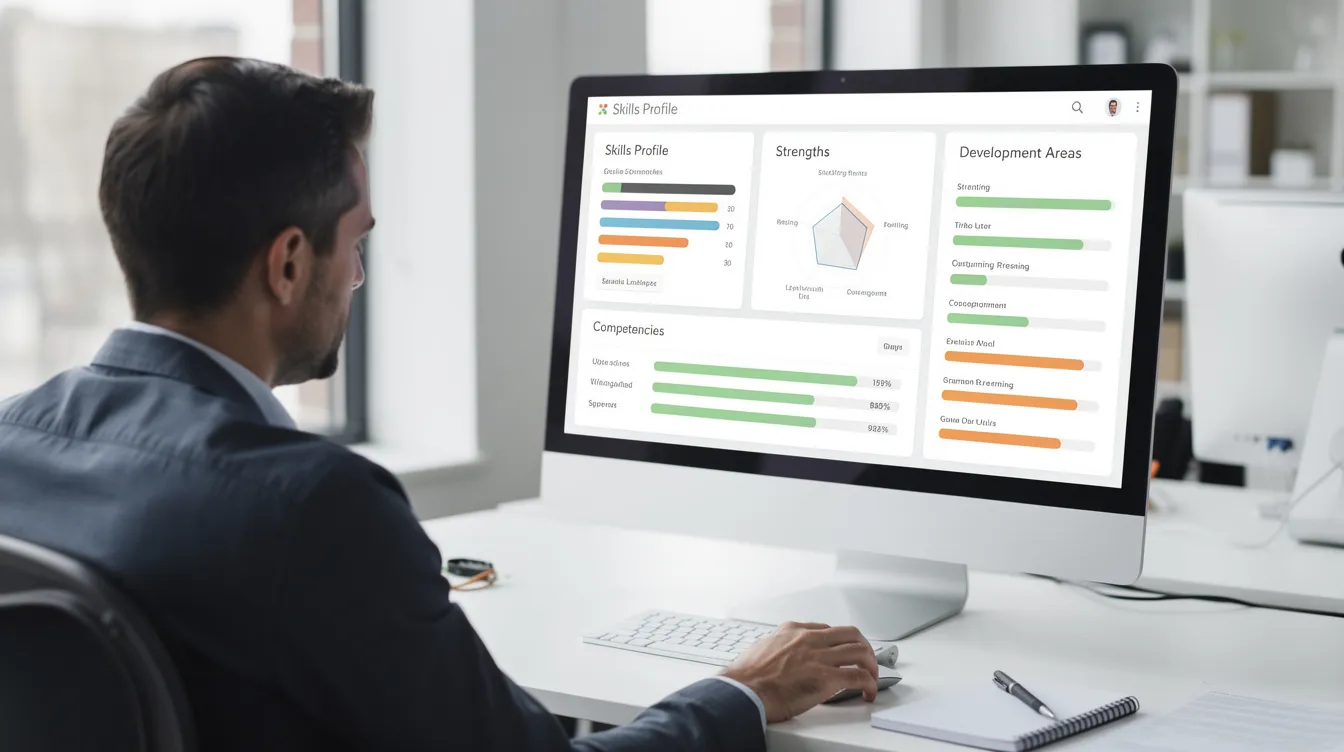
Receive immediate feedback through a role-mapping dashboard showing strengths, gaps, and matched entry-level roles.
Assessments typically include multiple-choice questions and scenario-based challenges, and hands-on challenges may be included in advanced assessments for candidates pursuing more technical tracks. Cybersecurity assessments can evaluate technical skills and risk management simultaneously, giving you a complete picture rather than a narrow score.
For context, the Certified Ethical Hacker (CEH) Assessment includes 50 questions, the Certified Network Defender (CND) Assessment tests network defense knowledge, and the Computer Hacking Forensic Investigator (CHFI) Assessment focuses on digital forensics. SANS offers four web-based cybersecurity assessment tools, and SANS CyberTalent Assessments are delivered online via GIAC exam engine-so the format of taking a secure, browser-based test is well-established across the cybersecurity field. Assessments help evaluate candidates' technical cybersecurity skills whether you are just starting out or benchmarking after years in the business.
Expect to spend about 20–30 minutes completing the test. You can typically pause and return later, and no prior job title in security is required.
Free Cybersecurity Skills Assessment vs. Traditional Approaches
Traditional paths into cybersecurity-degree programs, paid certification exams, bootcamp entrance tests-require significant cost, time, and often prerequisites. A free skills assessment takes a fundamentally different approach.
|
Factor |
Free Skills Assessment |
Certifications (CEH, Security+) |
Degree / Bootcamp |
|---|---|---|---|
|
Cost |
Free |
$200–$1,200+ per exam |
$5,000–$60,000+ |
|
Time |
20–30 minutes |
Weeks to months of study |
Months to years |
|
Purpose |
Discover potential, map roles |
Verify mastery |
Broad foundation |
|
Barrier to entry |
Basic digital literacy |
Prior experience often required |
Admission process |
|
Output |
Shareable Skills Profile |
Industry credential |
Diploma or certificate |
Unstructured resume screening and initial interviews rarely reveal specific cybersecurity skills, especially for career changers coming from help desk, network admin, or software QA. Meanwhile, skill assessments can be customized based on job roles, and candidates' results from assessments are only accessible to employers when the candidate chooses to share them-so you control the narrative.
The key advantage is low risk and fast feedback. You get a clear mapping to cyber roles, actionable guidance on where to focus learning resources, and a profile you can strengthen over time. A free assessment does not replace recognized certifications in the hiring process, but it tells you which certifications and training to pursue first.
How SkillsIQ Supports Free Cybersecurity Skills Assessment
SkillsIQ is the platform that powers your cyber skills profile. It hosts the cybersecurity online test, analyzes your results, and presents them as a simple, shareable profile you can use immediately.
-
Domain-tagged questions. SkillsIQ's assessment engine breaks cybersecurity down into tagged skills-log analysis, access control configuration, secure software practices, cloud security basics-so every question contributes to a granular skills map rather than a single score.
-
Role and learning path mapping. Once you complete the cyber security skills test, SkillsIQ maps your current cybersecurity skills to common entry-level roles and learning paths on the /skillsiq/ hub page. You see which responsibilities and tasks you can already perform and which ones need development.
-
Shareable outputs. Your Skills Profile shows strengths, gaps, suggested next skills to build, and role matches. Download it as a PDF or share a link with hiring managers, bootcamp admissions teams, or mentors to support your applications.
-
Built for repeat use. CyberTalent Assessments help identify high-potential cybersecurity talent, and SkillsIQ adopts the same philosophy: regular assessments track growth in cybersecurity skills over time, and pre- and post-training assessments reveal individual growth so you can see real progress. CyberTalent Assessments also benchmark current staff skills, making the platform useful for organizations evaluating their team as well as individual candidates. Assessments can help prioritize training on weak areas, ensuring every hour you invest in learning creates measurable improvement.
Career seekers should aim to retake or extend their assessment periodically to keep the profile current as they develop new abilities in areas like cloud security, penetration testing, or threat detection.
Frequently Asked Questions
The following questions address common concerns that go beyond the main sections above. Each answer gives concrete guidance for career seekers evaluating whether a free cybersecurity skills assessment fits their situation.
Is a free cybersecurity skills assessment enough to get my first job?
A free assessment and a strong Skills Profile can open doors, but most organizations still expect some combination of hands-on practice, portfolio projects like home labs or capture-the-flag events, and entry-level certifications. Use the assessment to identify the most relevant entry-level roles and then pursue targeted learning or internships to strengthen your profile. Think of it as the compass that points you toward the right job, not the entire journey.
What level of experience do I need before taking the assessment?
The assessment is built for beginners through early-career professionals. It assumes basic computer and internet literacy but does not require prior security job titles. Those with more advanced experience-such as aspiring cybersecurity professionals already working as system administrators or in IT support-can still use it to benchmark abilities and uncover gaps in areas like incident response, risk management, or secure configuration.
How often should I retake or update my cybersecurity skills assessment?
Active career seekers should aim to retake the assessment every three to six months or after completing major learning milestones such as a bootcamp module, an online course, or a certification exam. Regular reassessment keeps the Skills Profile current and shows growth to mentors, hiring managers, or training providers. CyberTalent Assessments help identify high-potential cybersecurity talent through exactly this kind of iterative evaluation, and SANS offers four web-based cybersecurity assessment tools that follow the same retake philosophy.
Does this assessment prepare me for certifications like Certified Ethical Hacker?
The free assessment is not a full CEH practice test, but it touches on foundational topics-basics of network scanning, vulnerabilities, and secure configurations-that underlie certifications like Certified Ethical Hacker. The Certified Ethical Hacker assessment includes 50 questions that go deeper into ethical hacking and penetration testing than this introductory profile covers. Treat the free assessment as a readiness and direction tool that indicates whether an offensive-security track or a defensive-security track might be your better next step.
How is my data and assessment result information protected?
The platform follows standard cyber security practices including encrypted transport, secure storage of assessment data, and limited access controls so that only the user and authorized personnel can view detailed results. Anonymized, aggregated data may be used to improve question quality and benchmark results, but personal details and individual answers are protected and not shared with customers or third parties without your consent.