
Detection engineering is the fastest-rising cybersecurity specialty most practitioners still struggle to define. If you work in security operations or are planning a career in the field, this primer covers what the discipline actually involves, how it differs from SOC analysis, why detection as code is reshaping the modern SOC, and what skills you need to break in.
Key Takeaways
-
Detection engineering is the discipline of designing, building, testing, deploying, and tuning detection logic that transforms raw telemetry into actionable security alerts for SOC teams.
-
The detection engineering lifecycle is iterative: it runs from threat modeling and data source assessment through detection creation, testing, deployment, tuning, and retirement.
-
A mature detection program uses detection-as-code to treat detections like software, with version control, peer review, and CI/CD pipelines.
-
AI tools are changing how detection engineers design and tune detection logic, but they are not replacing the human analyst who defines objectives and validates outputs.
-
Breaking into the role requires a blend of security operations knowledge, data engineering skills, scripting ability, and a portfolio of real world skills demonstrated through practical projects.
Detection Engineering, Defined
Detection engineering is the practice of designing, implementing, and maintaining detection logic that can identify malicious activity across endpoints, networks, SaaS applications, and cloud environments. The term engineering is deliberate: this discipline applies software engineering principles to detection logic, treating rules and analytics as code that must be versioned, tested, and measured.
Organizations generate massive amounts of security data from SIEM platforms, endpoint detection and response tools, identity providers, and cloud control planes. Detection engineering is the process that translates that raw security data into actionable signals. Instead of writing a generic "monitor everything" rule, a detection engineer targets specific attacker behaviors: credential theft, privilege escalation, lateral movement, data exfiltration. Each detection maps to a known attack technique, often referenced against the MITRE ATT&CK framework.
Detection content includes SIEM rules, EDR analytics, UEBA models, correlation rules, and behavioral baselines. Detection engineering treats all of this as a product: something with an owner, a version history, test coverage, and metrics for detection quality. It is a cyclical process for identifying threats, not a one-time configuration task.
How Detection Engineering Differs from SOC Analysis
SOC analysts and detection engineers occupy the same ecosystem but do different work. The distinction matters if you are planning a career path or building a security team.
A Tier 1 or Tier 2 SOC analyst in 2026 triages alerts that appear in the queue. They investigate entities (users, IPs, hosts), correlate data across tools, and escalate confirmed incidents. Their daily rhythm is reactive: an alert fires, and they respond. SOC teams depend on the quality of the detection rules feeding their queue. When those rules produce noise, analysts burn out.
Detection engineers work upstream of that queue. Their job is to design new detections, close detection gaps, refine detection rules, and improve the security detection pipeline so that when an alert fires, it represents a real threat. High-fidelity detections reduce alert fatigue in security operations by ensuring analysts spend time on genuine incidents rather than chasing false positives.
The collaboration pattern between these roles is a feedback loop. Analysts feed investigation findings back into the detection engineering program; detection engineers use that information to build better detection content. Integrating detection engineering and incident response enhances overall security effectiveness because the people who see attacks firsthand inform the people who build the next generation of detections. In a mature detection and response function, detection engineers, threat hunters, and incident responders share attack models and metrics but have distinct day-to-day responsibilities. Proactive detection engineering improves collaboration among all of these security teams.
|
|
SOC Analyst (Tier 1–2) |
Detection Engineer |
|---|---|---|
|
Focus |
Reactive alert triage and investigation |
Proactive detection design and tuning |
|
Primary output |
Incident tickets, escalations |
Detection rules, coverage maps, metrics |
|
Key tools |
SIEM console, SOAR playbooks, EDR |
SIEM query languages, Git repos, test frameworks |
|
Relationship to alerts |
Consumes alerts |
Creates and refines the logic behind alerts |
|
Collaboration |
Reports investigation findings upstream |
Converts findings into durable detection content |
The Detection Engineering Lifecycle
Detection engineering is an ongoing lifecycle, not a one-time project. The detection engineering lifecycle includes research, design, implement, test, and deploy phases, and it repeats continuously as threats evolve and environments change. Detection engineering includes visibility, telemetry, and threat modeling phases that precede any rule writing. Detection engineering measures security readiness through continuous feedback between the teams that build detections and the teams that use them.
Mature programs maintain a roadmap of detection coverage mapped to MITRE ATT&CK tactics and techniques. Without lifecycle discipline, detection libraries accumulate stale rules that generate noise, miss new attacker techniques, or both.
Threat Modeling and Detection Objectives
Threat modeling answers the question: what do we need to detect, and why? Teams use frameworks like MITRE ATT&CK alongside industry reports (e.g., ransomware trends from 2024 through 2026) to identify relevant attack techniques. Threat intelligence informs behavioral detection development by grounding detection priorities in observed adversary behavior rather than guesswork.
Mapping detection coverage to frameworks like MITRE ATT&CK helps identify gaps. A team might discover they have no detections for MFA fatigue attacks or unauthorized cloud role assumption, then prioritize those gaps. Detection objectives should be specific: "detect unauthorized MFA enrollment within five minutes" or "alert on privilege escalation in Azure AD."
Business context shapes prioritization. Critical applications, regulated data (PII, PCI, PHI), and high-value identities should drive which detection content gets built first. Effective detection engineering shortens the dwell time of intrusions; the average breach lifecycle often exceeds 200 days, and detection engineering reduces that timeline by catching attacker behaviors early.
Data Sources and Telemetry Foundations
Good detections depend on good data sources. Without the right logs, even well-designed detection logic fires on incomplete information or misses events entirely. Detection engineers assess endpoint logs, network traffic telemetry, identity logs, SaaS audit logs, and cloud control plane events.
Concrete 2026-era examples include Microsoft Defender for Endpoint telemetry, Azure AD sign-in logs, AWS CloudTrail, GCP Audit Logs, Okta system logs, and audit trails from major SaaS platforms. Detection engineers evaluate log availability, retention periods, and field-level detail to verify that detection requirements can be met. Behavioral detections combine various data points instead of relying on a single indicator; a detection for credential stuffing might correlate failed login counts, source IP reputation, and geographic anomalies.
Data source gaps create detection gaps. Missing DNS logs, short retention windows, or inconsistent schemas across log sources force engineers to work with infrastructure and logging teams to fix upstream problems.
Designing, Implementing, and Testing Detections
A detection engineer translates a technique (for example, password spraying) into testable logic: query conditions, thresholds, entity relationships, and time windows. Prototyping happens against historical data using SIEM query languages like KQL or SPL, or vendor-agnostic formats like Sigma rules.
Detection rules are peer reviewed and tested before deployment. Employing rigorous testing of detection rules is essential for continuous improvement. This includes unit testing with simulated or replayed attack data and regression tests to avoid breaking existing use cases. Automated testing and validation are necessary for effective detection engineering at scale. Detection logic is continuously validated through threat hunting, where threat hunters probe for unusual patterns the existing detection library may have missed.
Deployment, Tuning, and Retirement
New detections roll out through staging or test environments first, then move to production with monitoring for alert volume and false positives. Tuning involves adjusting thresholds, adding allow-lists, and incorporating contextual enrichment to improve signal-to-noise ratio.
Detection rules are stored in version control for consistency, making it possible to track changes and roll back if a rule floods the SOC queue. Detection engineers should learn from incidents to improve detection capabilities; every post-incident review is a chance to refine detection rules or create new detections.
Retirement criteria include obsolete attack techniques, replaced tooling, or low-value signals that no longer justify processing cost. A detection catalog with metadata on status (draft, active, deprecated), owner, and last review date keeps the library healthy.
The Detection-as-Code Approach
Detection as code is the practice of treating detection logic like software. Rules are written in code or domain-specific languages, stored in Git, tested automatically, and deployed through CI/CD pipelines. A modern detection repository organizes folders by platform or ATT&CK tactic, with YAML or JSON rule definitions and associated test cases.
Version control, code review, and automated testing increase detection quality and reduce regressions. Sigma rules serve as a vendor-agnostic standard: write a rule once, convert it to SPL, KQL, or Elasticsearch DSL as needed. Detection engineering helps reduce alert fatigue in security operations because detection as code workflows force teams to test and review rules before they reach the SOC queue, filtering out noisy logic early.
Benefits extend to collaboration. New team members onboard faster when detections are documented in code. Audit trails satisfy compliance requirements. Sharing detection content across cybersecurity teams and across multiple platforms becomes practical rather than aspirational.
CI/CD Pipelines for Detections
A CI/CD pipeline for detections works like this: a detection engineer commits a new rule; automated linting and syntax checks run; sample queries execute against test datasets; a peer review gate must pass; and the rule is promoted to staging, then production.
Automated checks can verify ATT&CK mappings, owner fields, and tagging (e.g., "high value," "experimental," "MFA abuse"). Rollback capability is critical: if a new rule generates unexpected noise, the team reverts through the same pipeline. These initiatives work best as joint efforts between security engineering and platform or DevOps teams.
A Day in the Life of a Detection Engineer (2026)
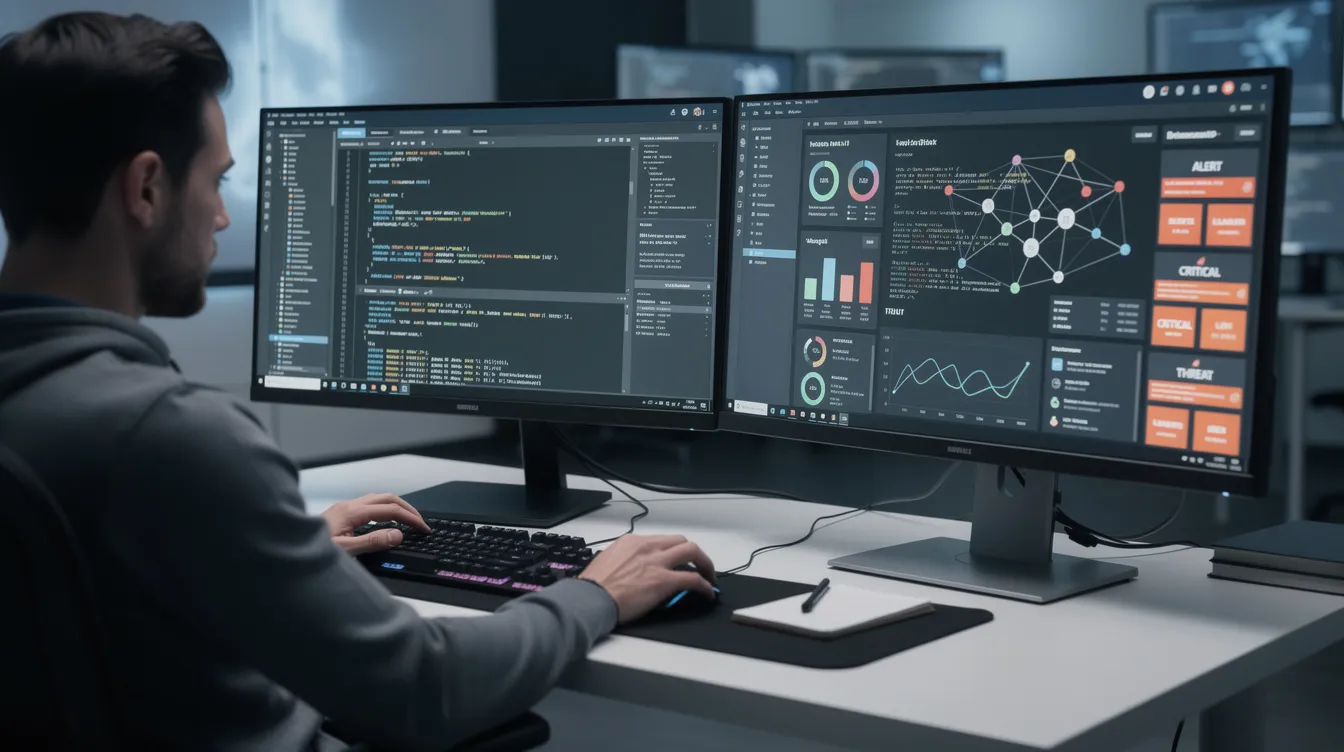
A detection engineer's morning might start with reviewing overnight alert metrics: which rules fired, which generated false positives, which stayed silent. By mid-morning, they might be analyzing a noisy Azure AD risky sign-in rule, adjusting thresholds after a batch of legitimate VPN logins from a new office triggered alerts.
After lunch, they join a daily standup with SOC analysts, incident responders, and threat hunters to discuss new attack patterns and detection gaps identified during recent investigations. IOC feeds provide immediate coverage of known-bad infrastructure, and operationalized threat intelligence enables rapid rule deployment when a new campaign surfaces. Threat intelligence integration reduces mean time to respond by converting intelligence into detection content within hours rather than weeks.
The afternoon might involve designing a new detection for generative-AI-enabled phishing lure delivery, testing it against historical patterns in the SIEM, and submitting it for peer review via a pull request. The role blends coding, data analysis, and communication; it is neither purely investigative nor purely software engineering.
Working with AI-Augmented SOCs
By 2026, many organizations run AI "copilot" systems that automatically enrich alerts and draft investigations. AI helps detection engineers manage massive data volumes that would overwhelm manual triage. AI enhances detection logic by providing contextual enrichment, adding user activity context, asset criticality scores, and behavioral baselines to alerts as they fire.
AI-driven SOCs ensure every detection gets investigated, even low-severity alerts that a human analyst might deprioritize during a busy shift. AI improves alert classification and reduces false positives by correlating alert generation patterns with known benign behaviors. AI enables continuous validation of detection rules in real-time, flagging rules whose performance drifts.
Detection engineers now design detections with structured context fields (entity roles, asset criticality, confidence scores) so AI systems can make accurate decisions. New feedback loops emerge: engineers review where AI misclassified alerts from a specific rule and update detection metadata to improve the detection output. This shifts tuning from simply reducing noise to maximizing machine-readability and context density.
The Skills and Tools Detection Engineers Need
The role sits at the intersection of security operations, data engineering, and software development. Core technical skills include:
-
Log analysis across various environments and log sources
-
SIEM rule writing (KQL, SPL, Sigma)
-
Scripting in Python or PowerShell to automate detection workflows
-
Familiarity with at least one major cloud platform (AWS, Azure, or GCP)
-
Understanding schemas, normalization, and how to join data sources for correlation logic
Soft skills matter too: clear writing for detection documentation, communication with SOC analysts about trade-offs between detection coverage and noise, and the ability to explain technical decisions to stakeholders. Continuous learning is non-negotiable; attacker techniques, cloud services, and machine learning tools change rapidly.
Common Tools in a Detection Engineer's Stack
-
SIEMs: Splunk, Microsoft Sentinel, Elastic Security
-
EDR platforms: Microsoft Defender for Endpoint, CrowdStrike Falcon
-
Cloud logging: AWS CloudTrail, Azure Monitor, GCP Audit Logs
-
Detection standards: MITRE ATT&CK (for ATT&CK coverage mapping), Sigma rules, YARA (malware patterns)
-
Developer tools: GitHub or GitLab for version control, CI platforms, Jupyter notebooks for prototyping detection logic
-
AI-assisted tools: query generators and validation assistants (human review remains mandatory)
-
SOAR systems: for automating detection and response playbook execution
How to Break Into a Detection Engineer Role
Most detection engineers do not start in the role directly. Common entry paths include working as a SOC analyst, security engineer, or systems administrator and gradually taking on detection-writing responsibilities.
Foundational knowledge to build first: networking basics, operating system internals (Windows event logs, Linux audit logs), common attack techniques, and how log formats work. From there, practical projects carry more weight than certifications alone:
-
Build a home-lab SIEM setup using free or open-source tools
-
Write Sigma rules against lab-generated or public datasets
-
Map logs to ATT&CK techniques and document your detection coverage
-
Practice with adversary emulation frameworks like Atomic Red Team
Certifications that cover security operations (Security+ or SOC-focused training programs) signal baseline knowledge. But employers increasingly want to see evidence that you can create rules, test them, and monitor performance against real data.
Building a Detection-Focused Portfolio
Publish example detections on GitHub, including documentation and test data where possible. Contributing to open-source detection content projects (like the Sigma ruleset) gets your work peer reviewed and gives you visibility in the community.
Document end-to-end mini detection lifecycle projects: start with a threat hypothesis, identify the data sources, implement and test detection logic, and write up results. This demonstrates the real world skills employers look for, not just the detection creation itself but the complete guide through the engineering process.

Detection Engineering in the Broader Detection and Response Ecosystem
Detection engineering does not operate in isolation. It sits alongside threat hunting, incident response, red teaming, and vulnerability management. Detection engineers operationalize intelligence from these teams by converting findings into durable detection content.
A concrete example: red team assessments in 2025 and 2026 revealed MFA fatigue attacks (push-bombing) as a growing vector. Detection engineers translated those findings into rules that alert on rapid sequences of denied MFA pushes followed by a successful authentication. Threat hunters validate whether existing detections catch new variants by probing for unusual patterns in network traffic and user activity logs.
Detection engineering requires establishing a feedback loop with incident response teams. Detection engineers learn from incidents to improve detection capabilities; incident responders rely on high-quality alerts to investigate faster. Shared metrics and dashboards tie the ecosystem together: ATT&CK coverage, mean time to detect, and false positive rates per rule family.
Mature detection programs lower cyber insurance premiums because insurers recognize measurable detection and response capabilities. Detection engineering enhances compliance with regulatory frameworks like DORA by providing auditable detection coverage and traceable rule histories. These are not just the detection engineer's concerns; they shape how security teams justify budget and headcount.
Common Detection Engineering Pitfalls and How to Avoid Them
Many organizations attempt to build a detection engineering program but stall due to predictable missteps.
Ignoring data quality. Writing detections against incomplete or poorly structured data sources produces unreliable alerts. Partner with infrastructure teams to fix upstream logging issues before investing in complex detection logic.
No clear objectives. Detections built without a specific threat model or business context tend to be too broad (generating false positives) or too narrow (missing variants). Every detection should tie to a documented objective.
Skipping the cloud and identity layers. The 2026 SANS/Anvilogic survey found that 43% of organizations cite cloud-native environments as their largest detection gap. Ignoring cloud control plane and identity provider telemetry leaves threat actors with unmonitored paths.
No feedback loop. Without regular input from investigations, detections drift. The same survey found that 66% of false positives stem from vendor-provided default rules that were never tuned to the environment. Custom detections built with investigation feedback outperform generic out-of-box content.
Set-and-forget rules. Detection content must be continuously improved. Schedule regular reviews, track detection ownership, and retire rules that no longer match the threat landscape or environment. Machine learning models can help identify rules whose performance has degraded, but the decision to retire or refine detection rules still requires a human analyst.
Frewuently Asked Questions
Is detection engineering only relevant for large enterprises?
Detection engineering principles (clear objectives, mapped data sources, tested rules) benefit organizations of any size. Smaller teams may run a lighter detection program: focus on the highest-value assets, build a small set of high-impact detections, and use managed services or open-source tools instead of enterprise SIEMs. The discipline scales down; just the detection library gets smaller.
Can I practice detection engineering skills without access to a commercial SIEM?
Yes. Free or community editions of SIEMs (Elastic Security, for example), local log collectors, and public datasets let you write and test detection logic without a license. Start with Sigma rules, which translate into multiple backends and build portable skills. Adversary emulation frameworks like Atomic Red Team generate realistic log data you can use to validate your detections.
How do I know if a detection is "good enough" to deploy?
A detection is ready for deployment when it has a clear objective, adequate supporting data sources, test results against both benign and malicious scenarios, and at least one peer review. Deploy in "audit-only" or low-severity mode first to observe alert patterns before promoting to a high-severity or blocking rule. Monitor the detection output for false positive rates and true positive rates over the first few weeks.
Will AI replace detection engineers in the next few years?
AI is already useful for generating query drafts, clustering alerts, and automating parts of investigations. The 2026 SANS/Anvilogic survey found that 83% of practitioners use AI tools in their detection work, but only 42% trust AI for core tasks like authoring or tuning detection rules. The role will evolve rather than disappear. Expect more focus on pipeline-level design, metadata quality, and supervising AI-driven detection and response workflows. Detection engineers who can manipulate data pipelines and guide machine learning outputs will be in higher demand, not lower.
What metrics should a detection engineering program track?
Track a small core set: true positive rate per rule family, false positive rate, mean time to detect, ATT&CK technique coverage, and time from new threat intelligence to deployed detection. These metrics demonstrate the value of a mature detection engineering program and guide where to invest engineering effort. While 59% of teams track false positive rates, only about 14% actively prioritize reducing them. Tracking without action is a gap worth closing. Staying ahead of the latest threats requires measuring whether your detections actually catch real threats and whether your detection mechanisms keep pace as threat actors change their approach.